
 Uncategorized
Most of us picture a fire isolator blanket hanging on a kitchen wall, ready for a pan fire. That image is a bit out of date. Think about what’s charging in your home right now: phones, a laptop, a power bank, maybe an e-bike in the corridor or an EV in the carpark. Every one of those runs on a lithium battery, and when one fails, it doesn’t behave like a stovetop flame.
That’s why choosing the right fire blanket Singapore households use matters more than it used to. Here’s what’s changed, and what to look for before you buy.
Why a standard fire blanket often falls short
Most basic blankets sold in Singapore are fibreglass with a silica coating. They’re typically rated for roughly 500–700°C. For a small oil fire in a pan, that’s fine. The job is simple: cut off oxygen and let things cool down.
Lithium battery fires are a different story. They burn hotter, can reignite after you think they’re out, and may release toxic gases while they do it. A blanket that wasn’t built for that heat can degrade right when you need it most. If you’ve only ever thought of a fire blanket as a kitchen accessory, it’s worth rethinking.
What makes lithium battery and EV fires so tricky
When a lithium cell overheats, it can go into what’s called thermal runaway. In plain terms, the battery heats itself, and the heat keeps feeding the fire. Three things make this harder to deal with:
- Extreme heat. Temperatures climb far beyond a normal household fire.
- Reignition. Flames may die down and return minutes later.
- Gas and pressure build-up. Trapping everything under a sealed cover can cause the blanket to balloon or release pressure suddenly.
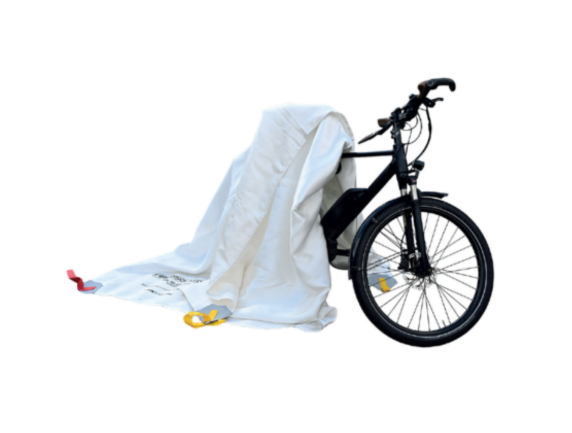
This is the gap a purpose-built Fire Isolator Blanket is meant to close.
What to look for in a fire blanket in Singapore
Not every product labelled “fire blanket” is equal. Before you pick one, check these points:
- Temperature rating. Look for a blanket rated well above 700°C if you want protection against battery and EV fires. The Fire Isolator Blanket is rated up to 1600°C and made from silica cloth.
- Breathable design. A breathable blanket lets built-up gas escape in a controlled way, which reduces ballooning and sudden pressure release.
- Reusability. Many standard blankets are single-use. A reusable one, inspected properly after each use, gives you far better value.
- Safe handling. Itchy fibres and sharp edges make a blanket harder to deploy under stress.
- Certification. Ask for proof. The Fire Isolator Blanket is certified to ISO EN 13501-1, ASTM D6413, NFPA 701 and DIN SPEC 91489, and documentation is available on request.
If you want to see how different options stack up, the fire blanket comparison page lays it out side by side.
Where a fire blanket earns its place at home
Whether you live in an HDB flat, a condo or a landed house, there are a handful of spots where a blanket makes sense:
- The kitchen, for the classic cooking fire.
- Bedrooms and living rooms, where phones, tablets and laptops charge overnight.
- E-bike and e-scooter charging areas, which is where a lot of lithium battery risk sits.
- Garages and storage spaces, especially if you charge an EV at home.
You can browse more situations on the fire blanket applications page.
Where to store it
Keep it where you can reach it in seconds. Near the kitchen, in the garage, or close to your EV charging point all work well. Don’t lock it in a sealed box or bury it behind other things. In an emergency, a blanket you can’t grab quickly isn’t much use.
A quick word on using it safely
A fire blanket is a first-response tool. It isn’t a replacement for professional help. If a fire is growing, or you’re not sure you can handle it, get everyone out and call 995. For an EV fire especially, the blanket helps contain flames and smoke in the early stages while responders are on the way.
It also helps to know the technique before you need it: how to approach, how to place the blanket, and when to step back. Hands-on training sessions are available for households and businesses, which you can ask about through the contact page.
Quick answers
Can one blanket handle both kitchen and lithium battery fires?
Yes, if it’s rated for high temperatures. A blanket built for lithium and EV fires covers ordinary household fires too.
Is a reusable fire blanket safe to use again?
It can be used more than once after proper inspection. Check it for damage before putting it back in storage.
What size should I get?
Smaller blankets suit appliances, power banks and laptops. Larger ones are made to cover vehicles, including EVs. If you’re unsure, the FAQ page is a good starting point.
The bottom line
Homes in Singapore are full of lithium batteries now, and the old kitchen-only blanket wasn’t designed for that reality. A higher-rated, breathable, reusable and certified blanket is a small purchase that covers a lot of ground.
If you’re ready to look at your options, take a look at the Fire Isolator Blanket in the shop, or read more about Asia Green Fire Safe to see who’s behind it. For a straight answer on the best fire blanket Singapore buyers can use for their specific setup, send an enquiry and the team will point you to the right size.
